


Impact Report 2025
When health workers cannot see who they are reaching, they cannot know who they are missing. In 2025, we set out to close that gap. Across 7 projects in 3 countries, our partners enrolled and verified 1,404,633 unique people and more than 1.1 million life-saving health services.
Download the full report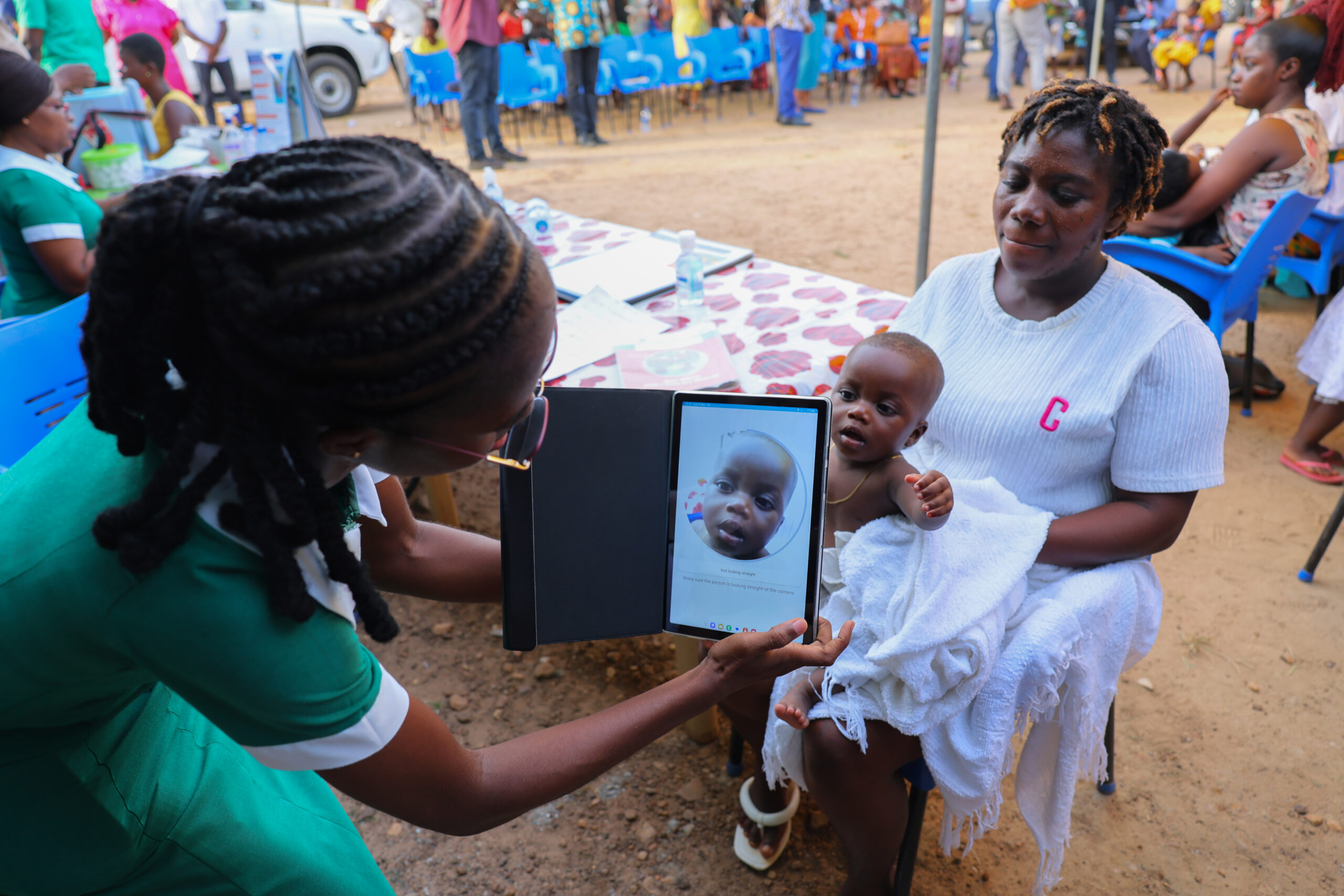
What changed in 2025
Across 7 projects in 3 countries, our partners enrolled and verified 1.4 million unique people, a 114% increase from 2024. Health workers verified more than 1.1 million life-saving health services, including 323,041 children vaccinated, 692,953 patients treated with deworming pills, and 22,313 people’s eyesight restored through trachoma surgery. Today, 2,253 frontline workers are now actively using Simprints technology, up 65% from last year.

Key findings in 2025
- $11.80 in social benefits for every $1 invested, with 196 deaths averted (Bangladesh)
- Penta 3 vaccination data accuracy increased from 55% to 91% within three months (Ghana)
- 96% of health posts improved service delivery when incentives were linked to biometric verification (Ethiopia)
- 95% of health workers reported high motivation and partner satisfaction scored 4.16 out of 5
- First RCT launched with Harvard, University of Ghana, and University of Michigan with 4,400+ children enrolled
Looking Ahead: 2026 and Beyond
Our scale-up in 2025 reinforced a central truth: digitising health systems is about more than improving data; it is about changing how frontline workers use that data to deliver better care. Across our deployments, three lessons stood out.
In Ethiopia, the team paired biometric verification with performance-based incentives. 95% of health workers reported improved motivation, and service delivery improved when workers knew their impact was being accurately measured. But we also learned that technology alone is not enough, persistent infrastructure and equipment gaps in remote facilities need to be addressed alongside digital rollouts. A new, expanded PBI project in 2026 gives us the chance to act on that.
In Ghana, health workers moved from paper registers to biometric eTrackers, which improved data quality and corrected systemic over-reporting. But the high adoption rates were not only because health workers trusted the system and the data it produced. They also reflected community engagement led by trusted health workers across 1,677 communities. In 2026, we will expand into new geographies and apply what we learned about engaging communities from the start.
In our maternal and child health project in Bangladesh, every $1 invested in Simprints technology generated nearly $12 in social benefits. We can drive the cost per verification down further by reducing hardware dependencies, shortening deployment timelines, and integrating more closely with existing national health databases.