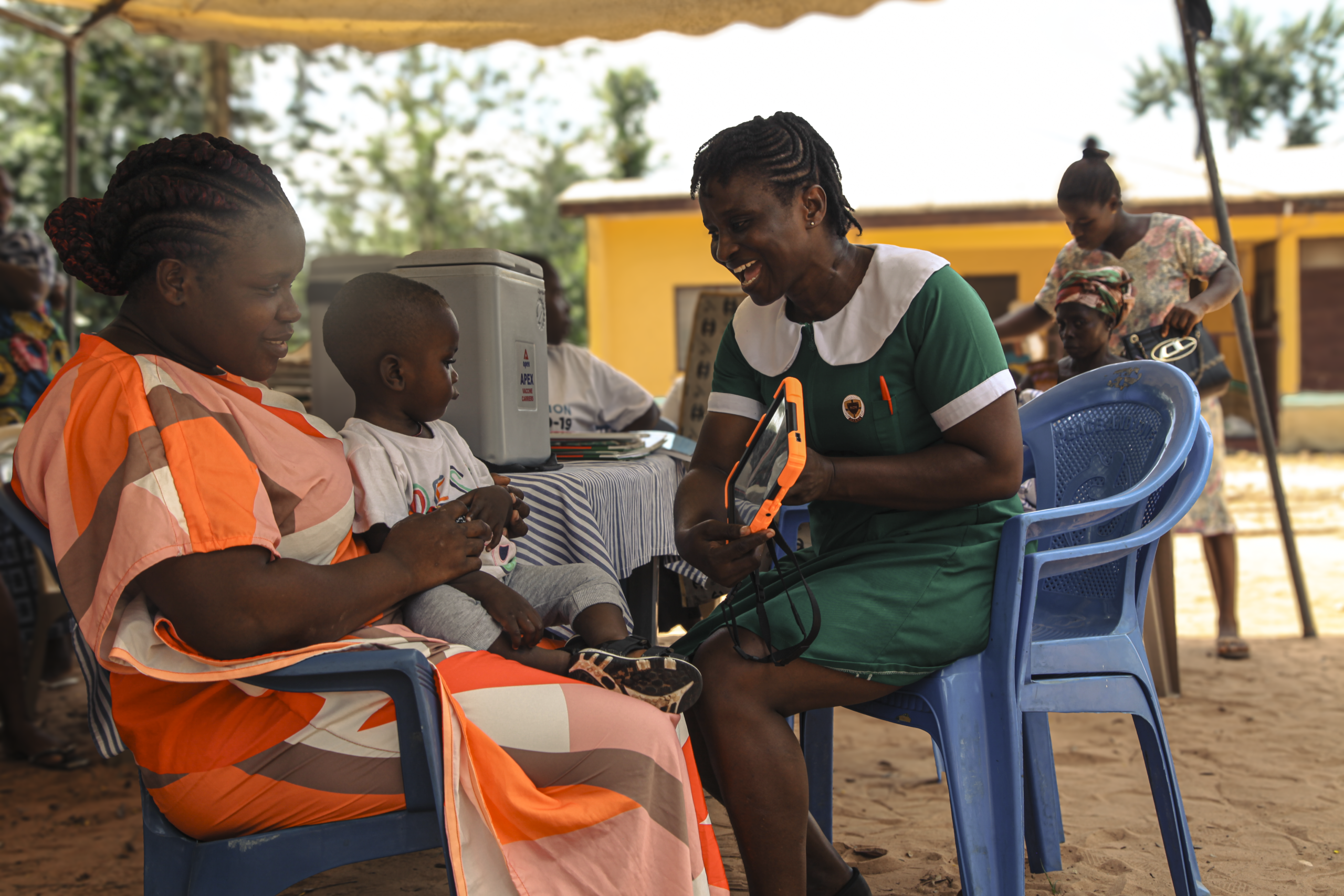


Abstract data to life-saving care: making technology innovation count for every child
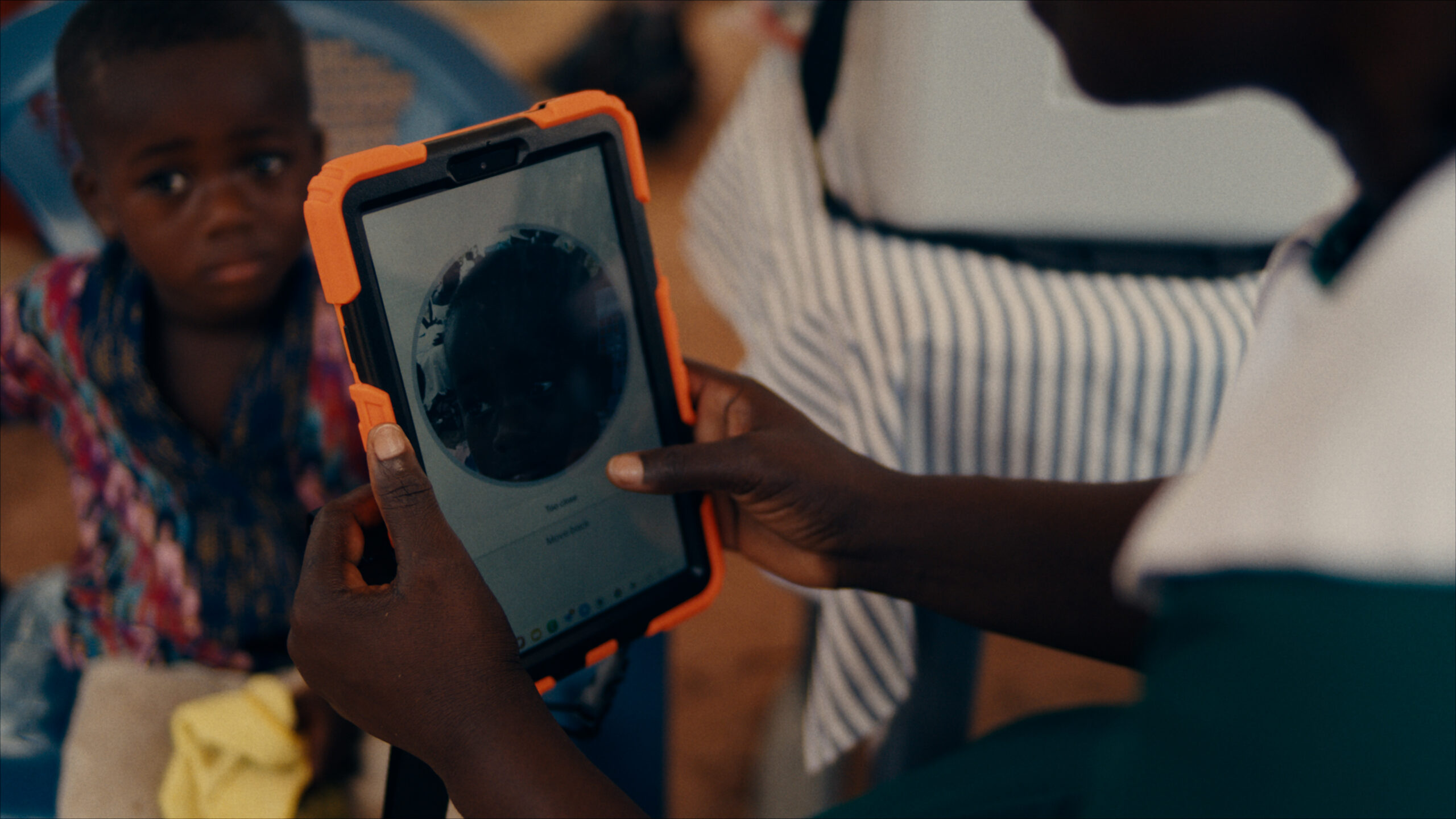
By Stephen Taylor, Chief Delivery and Impact Officer, Simprints
I spent 15 years working across some of the world’s most protracted and challenging conflicts. It was an immense professional privilege, and I still feel a deep sense of solidarity with those delivering frontline humanitarian support to the people most in need.
The reason I joined Simprints and why I remain so excited by the mission, is that we are striving to use technology to help our partners build better visibility and integrity around exactly what services were received, by whom, and when.
I’m a firm believer that appropriately applied technology can help ensure even greater transparency for our impact. It’s not a silver bullet; I know so many inspiring MEAL practitioners who work tirelessly to set up truly robust manual monitoring systems. However, technology can help, ensuring we know, with as much confidence as possible, which individual received what service, and where.

Visibility where it matters most
At the heart of our approach is a simple goal; helping partners improve patient identification. By establishing this foundation of verified individual data, we provide the quality and confidence required to move beyond estimates toward more accountable, informed services. To date, we have supported partners in reaching 4.4 million people, with our large-scale programmes grounded in an accurate and transparent understanding of the populations they serve.
Now, we are working to ensure that no child misses out on critical support from birth. Through the development of world-first, AI-driven biometrics, we are creating technology specifically designed for infants. Powered by Arm’s power-efficient compute platform, our tool leverages on-device AI, allowing health workers to capture high-quality biometric markers, such as the face, ears, or feet, on their phone. Meanwhile, AI-driven algorithms project growth patterns to create a digital health ID that ‘grows’ with the child.
This ensures that life-saving interventions, such as the four-dose malaria vaccine, can reach the right child at the right time, every time.
Refining tools for the frontline
During a recent trip to Ghana with our partners Arm and Gavi, we saw how true data visibility is only possible when technology is built for the reality of the clinic. If a tool doesn’t work seamlessly for a frontline health worker, the data simply won’t exist. By focusing on these operational realities, we ensure our tools are practical for everyday use, because when we make technology intuitive for the frontline, we secure the verified, individual data that creates system-wide accountability.
You can see this in action in Arm’s new video from Ghana:
One nurse I spoke with described the frustration of searching paper records for a patient’s history, a time-consuming process that takes away from service delivery. She explained that with the digital patient identification approach, she no longer has to wonder if she is looking at the correct record among hundreds of similar names. The tool has turned a lengthy manual search into a three-second verification, giving her the confidence that the data she records is accurate and tied to the right child, every time.
Market day in Ghana
“I remember watching a mother arrive at an outreach vaccination campaign on a busy market day, clearly pressed for time. Her primary concern was the queue; she was juggling her child’s health with the need to get back to her stall, and she simply couldn’t afford to sit for hours while so many children were treated.
The digital approach helped change that. By moving away from manual patient lookups, the process was fast enough to get her back to her day without delay. There was also a secondary sense of relief regarding her child’s health booklet; she mentioned how much she worries about losing it, knowing it would be nearly impossible to remember exactly which vaccinations her child had already received.
Watching this process in a rural clinic is a powerful experience. When a health worker scans a baby’s feet or ears, they are completing a medical record that ensures a child is not lost to the system. It provides the worker with immediate clarity on exactly what is needed next for that child, ensuring continuity of care even if the physical booklet is eventually lost.”
Scaling access to care
Globally, at least half of the world’s population lacks access to essential health services, and millions die each year from preventable diseases. This tragedy is driven by a critical failure: life-saving innovations aren’t reaching the people who need them most.
At its heart, our work is about the simple but profound goal of making sure more people get the essential health services they need. By using our biometric technology, we’re able to build an accurate map of coverage, showing us exactly who has received what and when.
This kind of verified, quality data is the backbone of real impact. When we increase coverage, we aren’t just improving statistics, we are ensuring more people access the vaccinations they need. This leads to healthier lives, improved livelihoods, and countless cases of disease and illness averted.
Learn more
- Hear from our partner Arm
- Learn more about our AI-driven infant biometrics
- Delve into our evidence base